

The Name Jesus
The name Jesus is the name of our Lord’s lowliness as a Man. He received it when He entered this world (see Luke 1:31). It is the name He bore when He humbled Himself to death on a cross. Yet it is also the name before which every knee must bow. This includes the lost. For us, this name Jesus has special value. Yet we must never use it as if this person were not our Lord. For even if “He is not ashamed to call them brothers,” it would be disregard. It would disregard His divine being and His highest dignity. We would do so if we called Him “Brother.”
We See Jesus
In Hebrews 2:9 we read: “But we do see Him.” This verse is not an appeal, but a fact. We see Him. We do not see with our physical eyes. We see with the eyes of the heart. Yet it is still real seeing. Our eyes follow Him in the Spirit. He was visible here (see 1 John 1:1). We see Him, “who was made for a little while lower than the angels.” He was so “because of the suffering of death.” He is “crowned with glory and honor.” One day we will see Him with physical eyes. This will happen when He comes to take us. Then we will be like Him. Until then, it is lived reality that we see Him by faith. For faith overcomes the invisible. It is conviction of things “not seen” (Hebrews 11:1).
The One Focus
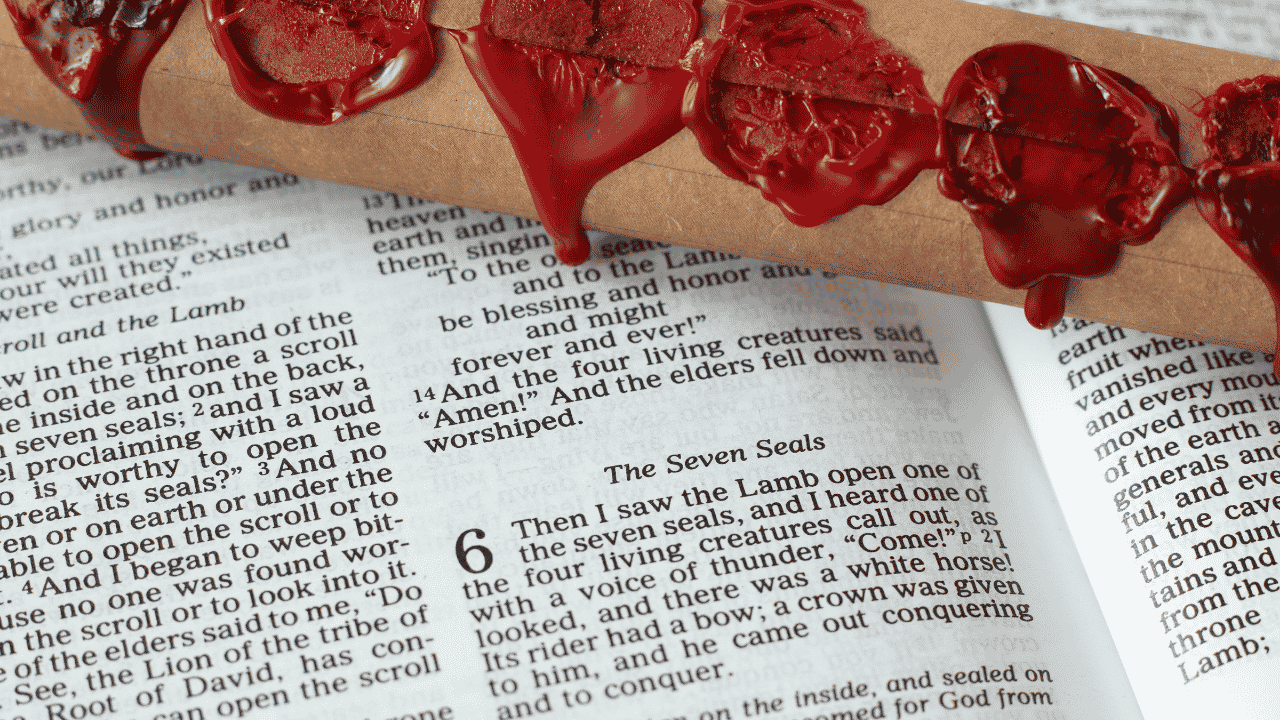
It is not said that we see anything else, other than Him. He is in heaven, crowned with glory and honor. The apostle John entered the opened heavens in the Spirit. He saw many special things. Yet he was not in danger of giving them more weight. All of them were directed to the Lamb. The Lamb is their center and culmination. If we want to be kept from distraction on earth, we need only have the Lord Jesus before our eyes. We should see Him crowned with honor in glory. Then everything else becomes secondary. It must fade before the sight of Jesus. And when we are actually in heaven, occupied with Christ, as John once was, nothing we see will divert our eyes. Nothing will draw them away from heaven’s center.
Consider Jesus
Hebrews 3:1 calls us to “consider Jesus.” To consider means to look carefully. It also means to view from different angles. Two angles, typical of Hebrews, are set before us here. The first shows us the Lord Jesus as the Apostle of our confession. It is our heavenly calling. The second shows Him as our High Priest. Israel’s apostle was Moses. The high priest was Aaron. Both offices unite in Christ. They lead God’s people to the heavenly Canaan. They do so through the wilderness of this world. As the “Apostle of our confession,” the Lord proclaimed to us “the great salvation.” It is the message of a completed redemption. It gives us the right to inherit glory.
As “High Priest,” He opened access to the throne of grace in the sanctuary. He also supports us from heaven. He identifies with our weaknesses: “Therefore He is also able to save forever those who come to God through Him, since He always lives to make intercession for them” (Hebrews 7:25). This knowledge should give us confidence! The salvation we are to inherit has been obtained for us. The help to reach it will always be available. Our Melchizedek has a priesthood that is not transferred.
Looking on Jesus
Finally, we read in Hebrews 12:2: “… looking on Jesus, the originator and perfecter of the faith.” It happens that we are downcast in our circumstances. The longer we are in this world, the longer our race seems. Should we pause for a brief moment in such situations? Should we turn from the world’s difficulties? Then should we return to the race? How careless that would be! The apostle calls to us: “Do you not know that those who run in a race all run, but only one receives the prize? Run in such a way that you may win” (1 Corinthians 9:24). Hebrews 12 shows us that there are many witnesses. It shows it is worth living a life of faith. This remains true even with unfulfilled promises. We have not yet reached the goal. Yet we are not told to look at the witnesses. They are often flawed and weak.
The Spirit of God wants us to turn from everything. He wants us to look only at Jesus. Was the Lord ever impatient during His life on earth? Did He ever stop in His race? No, He continued it to the end. He reached the goal and “has sat down at the right hand of the throne of God.” Nothing stopped Him on His way. Neither the hostility of sinners, nor the cross, nor the shame did so. He reached the goal. Before His inner eye stood the joy. It was the joy of glorifying the Father. It was the joy of completing the work of redemption. And His joy was to have acquired a bride for Himself. Therefore the appeal to look at Jesus! He is “the originator of the faith.” He has gone before us all to reach this goal. He did so so that we may reach it too. He is “the perfecter of the faith.” To this day, He is the only One who has reached this “perfection.”
Strength for the Way
Let us ask the Lord to look at Him in faith. Let us also encourage one another to consider Him. Let us fix our eyes on Him without distraction. There lie our happiness and our strength. We read of this already in the Psalms: “Blessed is the person whose strength is in You … They go from strength to strength” (Psalms 84:6, 8). The goal will soon be reached. Soon we will have reached the summit of grace. Then we will enjoy the rest He obtained. He already enjoys it today. He is waiting to have us with Him. When we are with Him, our race of faith will be finished. 









Comments (0)
No comments yet.