
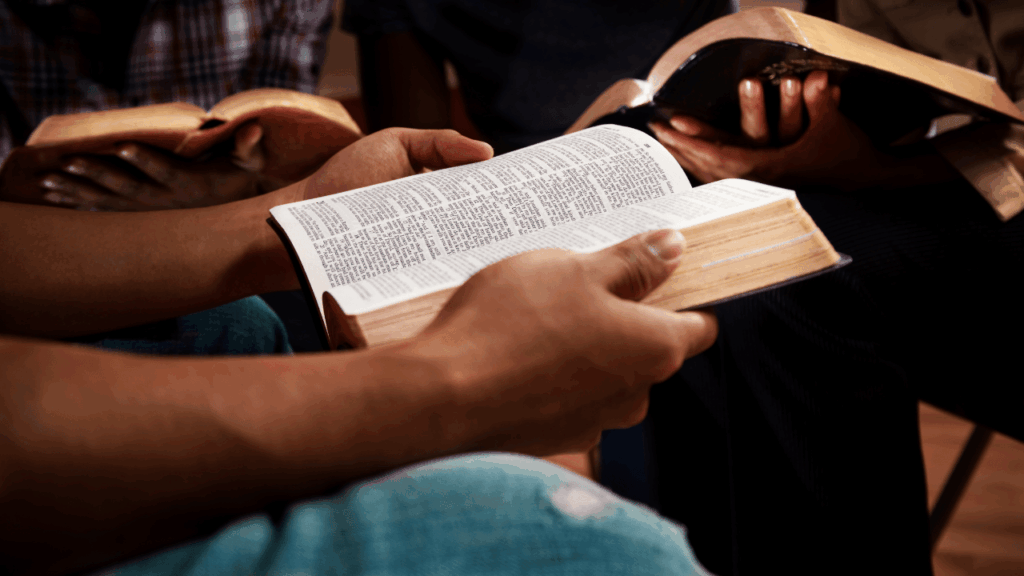
“The Book of Psalms” [1] – “Medicine chest”, hymnal, or more?
Many of us like to read the Book of Psalms again and again because the texts often speak directly to us and strengthen us. It is, therefore, particularly useful to explore this wonderful “book of poems” more closely in the overall context of the Bible and its purpose. After all, the Psalms form an important part of the teachings in the Word of God as a whole. In addition, everyone has certainly come across verses that almost shock us as Christians, e.g., verses in which vengeance is called for (even in a messianic Psalm) such as Psalm 69:27 [2]!).
Then, some passages speak of temporal conditions that were not at all within the poet’s sphere of ex-perience (when has a king ever reigned in Israel “to the ends of the earth” (Psalm 72:8 [3])? Do the Psalms perhaps have a horizon that lies entirely beyond words of consolation? This question is reason enough to examine a few points to then read and use the Psalms with (more) insight. [4] This short in-troduction is intended to help with this.
I. General
1. Origin
The earliest psalm probably comes from Moses (Ps. 90), one of the last from the time of the captivity in Babylon (Ps. 137). In total, the Psalms, therefore, span around 900 years! Many of them (over 70) were written by David, some by some of his singers (Asaph, sons of Korah).
David certainly also played a significant role in the creation and use of the songs in worship (cf. 1 Chron. 16:4).
It was often personal or shared experiences that prompted the poet to compose the Psalms. At the same time, however, it was also the “Spirit of Christ speaking in them” (1 Peter 1:11); David, for example, calls God “in the Spirit” in Psalm 110 Lord (Mt. 22:43). “The Spirit of the Lord” spoke through him (2 Sam. 23:2). “The how of their origin is of very little importance compared to the way of their ‘design’.” [5]
2. Form and Classification in the Biblical Canon
The Psalms are written in poetic form. Hebrew poetry is very different from English and German poetry; it is not rhyme and meter but intellectual parallels that form the poetry. Some examples:
- Synonymous parallelism: two thoughts are the same and are placed next to each other. Example: “has his pleasure and … ponders his law” (1:2).
- Antithetical parallelism: opposites are set up. Example: “The LORD knows the way of the righteous, but the way of the wicked will perish” (1:6).
If this is taken into account, many passages become clear to us more quickly. In addition, some psalms have an alphabetical order at the beginning of the verses, for example, Psalms 25, 34, 37, 111, 112, and, of course, 119, but also Psalms 9 + 10 together. This made learning and singing easier, but it also had content-related reasons. [6]
Many psalms are provided with headings [7], which were probably instructions to the choir leader (chief musician) but also have an inner connection to the theme of the psalm (cf., e.g., Psalm 6). The follow-ing additions link to other psalms:
- “Maschil”(32, 42, 43-45, 52-55, 74, 78, 88-89, 142)
- “Michtam” (56-60)
- “Hallelujah” (111-113)
- “A Song of Ascents” (120-134).
3. Contents
150 Psalms offer an almost inexhaustible reservoir of themes. Nevertheless, a few prominent themes (an example follows in brackets):
- “Every kind of temptation finds its place in the Psalms.” (Ps. 57)
- “The Psalms are predominantly the expression of the feelings aroused in God’s people by the events.” [8] (Ps. 38)
- “The piety which they breathe is edifying in every age; the confidence in God which they often express, in the midst of temptation, has strengthened the hearts of many a servant of God in their trials.” [9] (Ps. 62)
- The suffering and exalted Christ is uniquely placed before hearts in the Psalms. This theme is certainly one of the most sublime of the Psalms (see below).
- “The Psalms therefore concern Judah and Israel, and the position in which those who belong to Judah and Israel find themselves. Their first characteristic is the expression of the action of the Spirit of Christ about or in the remnant of the Jews in the last days. Moreover, the Psalms present to us the place which Christ himself occupied among them when he was on earth.” [10] (Ps. 42-45)
- “That the counsels of God have their place in them, and that the Psalms are largely prophetic, is of course a fact.” [11] (Ps. 89)
Similar to Proverbs, the contrast between the righteous and the lawless is another important theme. The lawless one is often a reference to the Antichrist, as, for example, in Psalm 10:2.
Also striking is the frequent occurrence of the dwelling of God, Zion, Jerusalem; in short, the presence of God as the hope and joy of the psalmist. A theme that also speaks directly to us (see, e.g., Ps. 132).
4. Composition and Division
The “composer” of the Psalms, i.e., the person who put the Psalms in their present order, is unknown. In any case, Hezekiah had them used again (2 Chron. 29:30). “The Spirit of God oversaw the structure.” [12]
It is very important to see the Psalms in their respective contexts and not (only) to read them in isola-tion. “The individual psalms are what individual words are in a sentence.” [13]
“It may be noted that the following principle is present throughout a certain great truth or historical event presented about Christ or the remnant. And then follows a series of psalms in which the feelings and sentiments of the remnant are expressed in connection with this truth or fact.” [14] (Cf. e.g., Psalms 9-10 and then Psalms 11-15). In addition, the first verse of a psalm often summarizes the main features of the entire psalm (e.g., Ps. 91).
The division of the Psalms into five books has already prompted the Jews to refer to the Psalms as the “Pentateuch of David,” i.e., to draw a parallel with the five books of Moses. In terms of content, one could, therefore, indeed make the following classification and structure:
- Book 1 (Psalm 1-41):
Christ, in the counsel of God, is the source of all blessings for his people (Israel).
Prophetic: The remnant is still in Jerusalem.
The 1st book of Moses: The book of God’s beginnings and counsel. - Book 2 (Psalm 42-72):
Their ruin, but redemption in the last days.
Prophetic: The remnant was driven out of Jerusalem (Mt. 24, Ps. 42).
The 2nd book of Moses: Redemption and Help in the Desert. - Book 3 (Psalm 73-89):
The holiness of God in his dealings with them (Asaph and the sons of Korah served in holiness!).
Prophetic: The restoration of the nation.
The 3rd book of Moses: Worship in the Sanctuary, walking in Holiness. - Book 4 (Psalm 90-106):
The fallen first man (90) was replaced by the second (91).
Prophetic: The introduction of the firstborn into the world (Heb. 1:5)
The 4th book of Moses: The wandering in the desert with the land as the goal. - Book 5 (Psalm 107-150):
The general results of God’s government. [15]
Prophetic: Looking back and looking forward to the full blessing in the Millennial Kingdom.
The 5th book of Moses: Looking back and looking forward to the future.
In the New Testament, the Psalms are quoted directly around 88 times, not to mention countless allu-sions. This puts them beyond any doubt as to their inspiration.
II. The Right Approach to the Psalms
The sometimes great contrasts between statements in the New Testament and those in the Psalms quickly become apparent to every reader and give rise to questions. For this reason, here are a few aspects that should help us to understand the Psalms better.
1. The Difference Between the Position of the Psalmists and our Position before God
Christians know God as Father (Jn. 17:6) and are in fellowship with Him and the Son (1 Jn. 1:3), i.e., in unique relationships with divine persons. The Holy Spirit dwells in us permanently (Jn. 14:17). This distinguishes us fundamentally from believers of all other eras. This relationship is, therefore, naturally missing in the Psalms. The attitude of grace, exemplified by our Lord, is also typically Christian.
The Israelites, on the other hand, did not know full forgiveness, even though they often outshine us in their trust and joy. Their desire was for a just government of God and the judgment of their enemies. So it will be again in the future (cf., e.g., Rev. 6:10). But it is precisely this state of unconscious forgiveness that, unfortunately, still characterizes some Christians. Like the person described in Romans 7, they are still under the law. They are comforted by some of these psalms. But it shouldn’t stay that way. We would give up or never achieve our position as liberated Christians if we prayed like the psalmists in this respect! “Under the law, the Psalms may comfort us in real distress; under grace, we enjoy them be-cause we love Christ and have divine insight.” [16]
2. The “Vengeance Psalms”
Sometimes, we read encouraging verses right next to wishes for revenge, e.g., in Psalm 5: “Make your way straight before me … Let them atone, O God” (vv. 8.10). This confuses us and makes us unsure whether we can draw any benefit for ourselves from such a Psalm. After all, we all want to act in the spirit of the Lord: “Father, forgive them” (Lk. 23:34).
Of course, we also want evil to be judged because God is light, and we have become partakers of this nature 17 (2 Pet. 1:4). But at the same time, we desire the repentance of evil to the Lord. A comparison of Psalm 139:21 with Revelation 2:6 makes it clear: we do not hate the evil one, but the evil one. Our God is also a consuming fire (Heb. 12:29) and will one day bring just retribution (2 Thes. 1:6).
The difference between the present age and the past is made very clear by an event from the life of Elijah and his mention in the New Testament. When the evil king wanted to arrest him and sent a commander with fifty soldiers to him, Elijah asked for fire from heaven. Indeed, the fifty were consumed by fire (2 Kings 1:10, etc.). The disciples invoked this very event in order also to send down fire from heaven so that the enemies would be destroyed. But the Lord rebukes them (Lk. 9:54, 55)! “If Christ has come to save, how inappropriate is a prayer for judgment!”[18]
Now really is the pleasant time when God suspends judgment to fill his house with redeemed sinners! It is also the time when God gives a heavenly calling, not an earthly one.
But the same saints who now ask for mercy will in the future follow the Lord Jesus as his armies of war and exercise judgment (Rev. 19:14)! We will one day even judge angels (1 Cor. 6:3).
The cries for vengeance are, therefore, very characteristic of believers outside the present time of grace because these people expect God to intervene immediately (if it did not happen, it caused them problems, cf., e.g., Asaph in Ps. 73). The believers from the Jews in the future, the often quoted rem-nant, also expect this action of God in their favor, combined with the destruction of their enemies. For salvation is brought about for them precisely through the destruction of their enemies.
We can certainly apply the attitude of trust in many Psalms (e.g., Ps. 5:9) and many others to ourselves, but otherwise, great restraint is required because we can get the wrong idea [19].
3. The Experiences and Hopes in the Psalms
“We will find other elements: The distinguishing of the righteous from the rest of the people, The Spirit of Christ speaking (1 Pet. 1:11), The sins of the people, from which alone God can deliver the faithful. The idea of mercy precedes that of justice as the basis of their hope everywhere. The Psalms, apart from certain hymns of praise at the end of the book and at the end of some other Psalms, are never the expression of freedom.” [20]
Again and again, the hope of a glorious future under the reign of the Messiah fills the poets with joy. This gives the Psalms a special, prophetic character.
We too may love the appearing of our Lord Jesus Christ (2 Tim. 4:8) and look forward to the glorious time of blessing in the millennial kingdom. And yet the Lord has especially blessed us with heavenly, spiritual blessings (Eph. 1:3-7). As much as we need the Lord in everyday life, in sicknesses and worries – healing all sicknesses, as described in Psalm 103, for example, does not correspond to God’s dealings with us as Christians (see, e.g., 2 Tim. 4:20). This will be an earthly blessing for Israel in the future. Once we have recognized the differences a little, it will be easier for us to benefit from difficult Psalms (see below).
4. The Prophetic Character of the Psalms
The Psalms are not prophetic books like the book of Isaiah, for example. But the compilation of the individual Psalms as a whole, the often future-oriented content, the division into the five books, and many other features [21] show that the Psalms go far beyond the personal situation of the poet (or the reader). “The web of prophecy in them is woven out of personal experience. This particular prophetic character is to be found more or less throughout.” [22]
“The special interest is concentrated on two periods of dominant importance, namely the first and sec-ond coming of the Messiah to them (the Jews). The first is to lay for them and us the just and only foun-dation of all blessings, and the second is to bring them national blessing, but after a chastening trial of short duration but unpredictable severity. These are the prophetic events to which the Psalms give all their pathos of deep emotion, all their variety of profound expressions.” [23]
The future-oriented character of the Psalms becomes very clear in the Songs of the Steps (Ps. 120-134): both the inner and outer restoration of the Jewish people is presented “step by step” in this sequence.
5. Christ in the Psalms
Christ is the great theme of the whole Bible, but there is hardly any other book that speaks so deeply about the Lord Jesus as the Psalms. Even the rabbis recognized Psalms 22 and 72 as messianic.[24] In the New Testament, sixteen Psalms are quoted as referring to Christ. [25]
“Nothing can be more fruitful in its place than to be seized in the heart at the contemplation of the sufferings of the glorified Redeemer. There are, I think, three different kinds:
- He suffered on the part of man for the sake of justice and love;
- He suffered on the part of God for sin;
- He bore in his soul, at the end of his life, all the distress and affliction under which the Jews will come through the government of God. [26]
At the end of Christ’s life, these three kinds overlapped and were united in the sufferings of his last hours.” [27]
6. Our Benefit from the Psalms
So, although, as Christians, we may have a very different position before God and, therefore, naturally, a very different attitude toward people around us (namely, like Christ Himself when He was on earth), we still derive great benefit and blessings from studying the Psalms. “All Scripture … is profitable,” says Paul in 2 Timothy 3:16. “The writers of the Psalms are saints, and in everything fundamental in this respect, no matter what the age, we are on common ground.”[28] If we take into account the differ-ences and limitations, this blessing will be even greater:
- The contemplation of our Lord’s sufferings always fills us with joy and adoration.
- His deep compassion in our sufferings (cf. Is. 63:9: “In all their affliction He was afflicted“) also speaks to us again and again in the Psalms in a comforting way. “This is an inexhaustible source for us who have to walk our earthly path of trial and suffering alongside the particular – if we then know his compassion in this intimate way. ” [29]
- The poets’ deep trust in God encourages us to walk a path of trust as well.
- After all, we should also be interested in what will happen to Christ (and His earthly people) in the future. Prophecy is Christocentric: “The spirit of prophecy is the testimony of Jesus” (Rev. 19:10).
7. Christian Psalms?
Calvin, one of the great reformers, regarded the Psalms as a Christian hymnbook and wanted only Psalms to be sung! If we consider the aspects mentioned above, it quickly becomes clear that this would falsify our faith on the one hand but would also restrict it on the other. There is much that we cannot sing, and other things that are valuable to us are not even contained in the Psalms! [30]
The Psalms mentioned in the New Testament (Eph. 5:19; Col. 3:16) are not the Psalms of the Old Tes-tament but new songs and poems corresponding to the Christian blessing. These already existed at the time of early Christianity and were used in the meetings. Most of them were lost during the persecu-tions, especially under Diocletian.
But then why are there no “Christian psalms” in the New Testament, which form part of the New Tes-tament in an inspired form that is valid for all times? That would be wonderful, wouldn’t it? Perhaps the following considerations provide an answer to these questions: The Christian should and may be led and filled by the Holy Spirit (Eph. 5:18) and worship the Father and the Son in the power of this Spirit, alone or together. This Spirit, who wants to glorify the Lord Jesus, always works in a new and fresh way. At certain times, He may bring many believers under the impression of the Lord’s work. We owe many songs in our hymnals to this fact, for example. But the Father does not give the Spirit by measure; there remains an inexhaustible abundance of themes to sing to the Lord!
If we had such NT psalms, we might think that we would no longer need to engage spiritually. Then perhaps we would no longer be really involved inwardly. But this way, we can praise the Lord in a thou-sand ways, even without poetic talent, in prayers and songs, already here and soon in eternity, in perfection, with the New Song (Rev. 5:9)!
_________________
Footnotes:
[1] Thus, the divinely confirmed title in Acts 1:20
[2] Cf. the chapter “The vengeance Psalms” (II,2)
[3] Anyone who reads the psalm carefully will recognize in this formulation a glorious reference to the reign of the Lord Jesus in the Millennial Kingdom.
[4] The Lord Jesus gave some Christians in the 19th century special insight into the Psalms, including J.N. Darby, W. Kelly, F.W. Grant, and H. Rossier. In more recent works, e.g., by Gaebelein and Smith or also in the Scofield Bible, these thoughts are often taken up. This article is somewhat “peppered” with (partly free) quotations. This does not make the text any easier to read, but it may still be helpful.
[5] F.W.Grant, The Numerical Bible, Psalms, p. 13
[6] When mentioning the lawless one in Psalm 10:2, for example, the alphabetical sequence suddenly stops; six letters are missing!
[7] The revised version of the German Elberfelder Bible (Darby version) includes the headings in the verse count (as does the Luther Bible and many others), thereby recognizing the fact that the headings also belong to the inspired text (see also W. Kelly in Bible Treasury 8, p. 224).
[8] Grant, F.W., op. Cit. p. 9
[9] Darby, J.N., Synopsis Of The Books Of The Bible, Psalms, p. 42.43.
[10] Darby, op. cit. p. 45
[11] Grant, op. cit. p. 9.
[12] Darby, op. cit. p. 59
[13] Grant, op. cit. p. 10
[14] Darby, op. cit. p. 59
[15] According to Grant, op. cit. p. 10 and Concise Bible Dictionary, pp. 640,641
[16] Darby, op. cit. p. 48
[17] The Lord will also judge that evil is also recognized, for example, in the above verse from Psalm 69:27.
[18] Grant, op. cit. p. 29
[19] For example, the Catholic Church justified the Inquisition with the Psalms (according to W. Kelly, The Psalms, in The Bible Treasury, Vol 18, p. 200).
[20] Darby, op. cit. p. 51.52
[21] For example, there are very different frequencies of the occurrence of the names of God: In the first book, LORD about 270 times, GOD only 50 times; in the second book, on the other hand, 200 times God and only 30 times LORD.
[22] Grant, op. cit. p. 3.4
[23] Grant, op. cit. p. 10
[24] In a list by Edersheim, Psalms 2, 21, 45, and 110 are also mentioned as fully Messianic and some others as partially Messianic (18, 40, 41, 68, 89, 92). Quoted from Grant, Christ In The Book Of The Psalms, p. 51.
[25] 2, 8, 16, 18, 22, 40, 41, 45, 68, 69, 91, 97, 102, 109, 110, 118.
[26] On this third aspect, the booklet “The Sufferings of Christ” by J.N. Darby is very helpful.
[27] Darby, op. cit. p. 53-56
[28] Grant, op. cit. p. 9
[29] Kelly, op. cit. p. 200
[30] Of course, some psalms, especially the best-known psalm (Ps 23), have also influenced Christian songwriters
Comments (0)
No comments yet.