
A rich man came to a famous architect and said, “Build me the tallest building in the world. Money is no object.” “Gladly,” the architect replied with delight, “what did you have in mind?” The rich man explained his wishes to the architect:
“The building should look like a tall, slender tower.”
“No problem,” the architect answered.
“The tower must be at least 1500 m high.”
“That can be done,” the architect said.
“And in the high-rise I want elevators and all the necessary supply lines and connecting corridors.”
“All right,” the architect replied, already a bit more quietly.
“But the building may only have a diameter of 4 m.” The architect silently noted the requirement.
“The walls may be at most half a meter thick.” The architect swallowed, but the millionaire’s special requests were not yet over.
“My high-rise should be elastic and be able to move in the wind,” he demanded. “And on the top floor I want a power plant that ensures the energy supply of the entire building.”
The architect turned pale and declined the commission.
Made up?
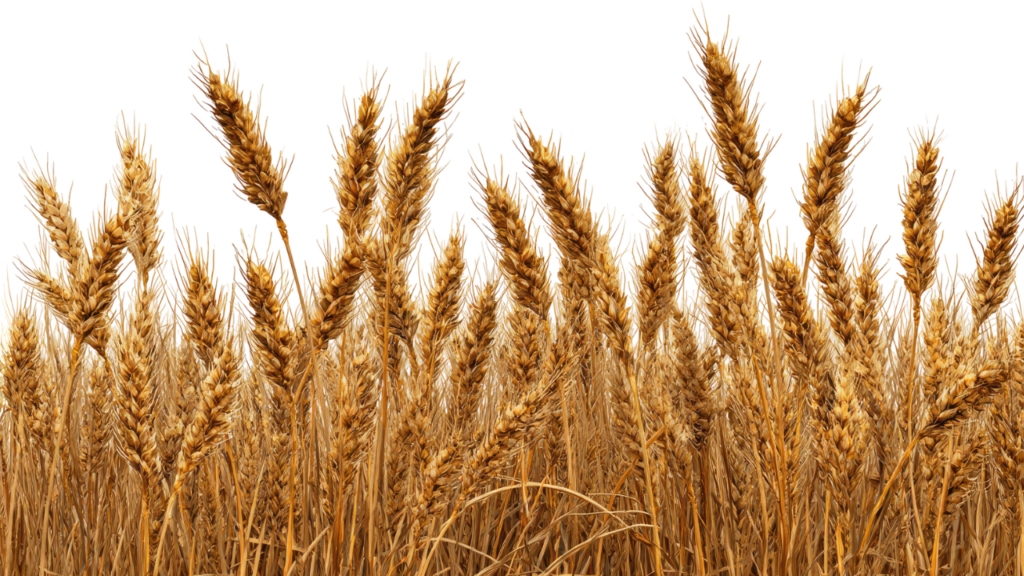
An invented story? Yes! But that is not the end of the story! A “tower” that is 400 times taller than its diameter really exists. And this “structure” does not exist only once on this earth, but billions of times. Perhaps you don’t even have to travel that far to admire this “structure.” You can find this “tower” in our fields: the grain stalk.
The miracle of the grain stalk
The wall of a wheat or rye stalk is only half a millimeter thick. Its diameter is 4.0 mm, and its height is 1.5 m (1,500 mm). The grain stalk is therefore actually about 400 times taller than its diameter. Despite its size, it stands upright and bends elastically back and forth in the wind; inside it, a power plant continually transports water, energy, and nutrients so the grain stalk can produce grains at the very top in the ear.
“Wonderful are Your works, And my soul knows it very well” (Psalms 139:14). David marvels at God’s creation.
Just one grain stalk, and yet a masterpiece; the grain stalk is only one of countless examples that make us marvel at God’s creation. Scientists do not only marvel; they also consider how to make use of the ingenious constructions of creation. Out of this, a whole branch of research has developed that brings biology and technology together: bionics.
Bionics
Constructions adopted from creation include, for example, swimming-fin propulsion modeled on a fish fin and an image-recognition circuit modeled on an insect’s eye. One of scientists’ most important goals is the technological imitation of photosynthesis. But no one has succeeded in that so far.
A leading weekly magazine notes: “Engineers look with envy at such ingenious achievements of the master builder ‘Nature,’ next to which their creations look as clumsy as a hand axe next to a precision milling head. Clumsy, for example, seems the wing of a glider compared with a dragonfly wing.”
For a bionics researcher, it is self-evident that he constantly discovers and admires new things. He cannot help but ask about the designer of everything he marvels at. Yet many of them, in their thinking, never get beyond the master builder “Nature.” Everything is supposed to have developed so ingeniously all by itself—and then with such diversity as well. They think the master builder “Nature” produced creation in all its splendor and diversity.
A masterpiece without a Creator?
Whoever admires the tallest tower in the world today automatically asks about the architect and builder of this structure. With a building, we naturally assume intelligent, educated people planned, designed, and built it. Why are people today inclined to explain nature by nature? Why do they shyly bypass the living God, the Creator of this wonderful nature?
Is it not because it is not only about creation in general, but also about our life? If God really is the Creator, then He also created you and me and has a claim on our lives. You cannot simply overlook that.
God, our Creator
The Bible states clearly: “For since the creation of the world His invisible attributes, that is, His eternal power and divine nature, have been clearly perceived, being understood by what has been made, so that they are without excuse” (Romans 1:20–21).
People who ignore God as Creator therefore have no excuse, because creation bears witness to the existence of a Creator. They do not give Him the honor that is due Him. They deny the Creator’s claim on their life.
When God reveals Himself in His creation, we marvel. But it is not meant to stop there—God wants to be honored. He is entitled to that: “Worthy are You, our Lord and our God, to receive glory and honor and power; for You created all things, and because of Your will they existed, and were created” (Revelation 4:11).
How much information is contained in a grain stalk that we consider worthless because, after the harvest, it is used only as straw? The grain stalk is similar to the flowers in the field, about which the Lord Jesus says: “But if God so clothes the grass of the field, which is alive today and tomorrow is thrown into the furnace, will He not much more clothe you? You of little faith?” (Matthew 6:30).
If God takes so much “trouble” with a grain stalk, how much more does He care about you and me—His creatures, whom He loves and for whose salvation He gave His Son (2 Corinthians 9:5).
“How many are Your works, Lord! In wisdom You have made them all; The earth is full of Your possessions” (Psalms 104:24).
Comments (0)
No comments yet.