
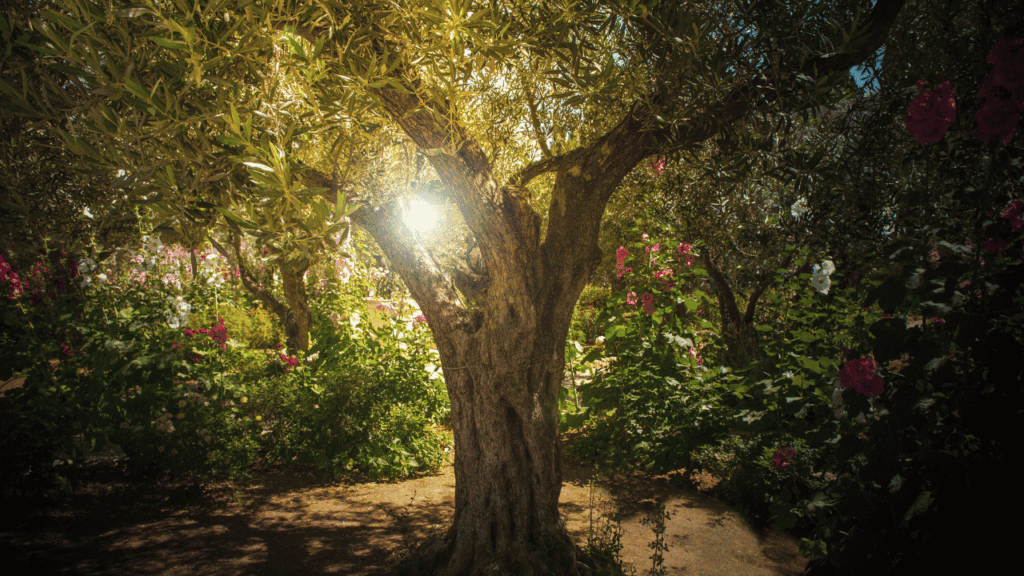
At the beginning, we already saw that the scene in Gethsemane is very suitable. It teaches us who the Lord Jesus is. It also teaches us who we ourselves are. It may help us understand these lessons better. We can ask why the Lord took his disciples with him. He went to the Garden of Gethsemane. He knew they would sleep. He also knew they would finally leave him. We have already encountered some answers. They came up during our reflection.
Looking at the Lord Jesus in Gethsemane should teach them (and thus us) …
… that he always longed for fellowship. He still longs for it today. He had appointed the disciples, “so that they would be with Him” (Mark 3:14). He had eagerly desired to eat the last Passover with them. This was before his arrest. Then the final stage of the path of suffering began. It led to the cross (Luke 22:15). In the same way, he now longed for fellowship with them. It was the last opportunity.
… that, as a true man, he waited for sympathy and comfort (Psalms 69:21). He suffered because he found no one. No one felt with him. Yet he did not despair. Instead, he sought the closeness of his Father. This shows that waiting for sympathy is a human need. Anyone who misses true sympathy from people can count on his compassion. He is the one “who has been tempted in all things as we are” (Hebrews 4:15). Such a person can also learn from him. In distress, he sought the closeness of God the Father. There he found rest.
… how deep his love, his obedience, and his devotion went. He was willing to endure such sufferings.
… that his path goes through suffering to glory. This is also the path of true disciples. The three disciples had already seen his glory. Now they were to learn something. Glory is reached only on the path of suffering. The sight of glory enables one to endure suffering.
… that his arrest was not due to Satan’s success. It was not due to the success of enemies. It was due to his willingness. They should first see the persecutors fall to the ground. Only then did the Savior willingly allow himself to be bound. He was not surprised by anything. He still is not surprised today.
… how one can accept the hardest trials from the Father’s hand. This leads to inner calm. The cup contained not a drop of sweetness. Yet he did not see Satan behind it. He did not see enemies. He did not see circumstances. He saw the Father’s hand behind it. In this way, his disciples can also become calm. They can be calm in their difficulties.
… that in Gethsemane we see the spotless example. It is unrestricted submission to God’s will. “Not My will, but Yours be done.” This expresses complete freedom from personal wishes. It rests on full trust. God’s will is always better than anything we could wish for.
… that despite all our failure, his shepherd love never changes. His care never changes either. As soon as he came to his disciples, he saw something. He could find no sympathy with them. He was immediately concerned with their souls again. Their souls were in great danger. When the enemies came, he stood protectively before them. Then he let them go.
Their own failure should teach them (and thus us) …
… that one should not dismiss the warnings the Lord gives us. How much effort the Lord made for them. He prepared them, so they would not fall in the trial.
… that one must not trust one’s own strength. The flesh is weak. Peter especially saw his feebleness again. Yet the threefold denial still happened. It was the denial of the Lord. How often we struggle to give up self-confidence. We should rely only on God’s strength.
… that our eyes are often blind to others’ distress. We are too occupied with our own matters. Perhaps someone near us is also waiting. They wait for sympathy and comfort. And we have not noticed it yet.
… how one can avoid entering temptation situations. This happens through watching and praying. Watching is the opposite of spiritual drowsiness. How many temptations involve our own guilt. We entered them through carelessness.
… to exercise their later service with humility and mercy. They should do so being aware that they also had failed.
With this, we end our reflection. This holy scene in Gethsemane certainly contains many beauties. We have left many of them untouched. Yet perhaps these lines could encourage to further quiet reflection on Christ’s sufferings. They could also deepen impressions of his wonderful person. May God grant us this in his grace. May we never forget his sufferings in Gethsemane.
Soon his feet will stand on the Mount of Olives again. Then he is no longer the sufferer. His face is no longer covered with sweat. And he is no longer alone. He will reign in power and great glory. Then his face will shine like the sun in its strength. He will be surrounded by all the saints. They will never leave him again.
Comments (0)
No comments yet.