

Which Believers Go Through the Great Tribulation
Do Christians still have to go through the Great Tribulation? Will the Lord Jesus take the assembly to Himself before the Great Tribulation, or only later? – These are questions that many children of God concern themselves with. Some are anxious and distressed about it, because they fear that they may not have the strength to endure to the end. Some believe it is a sign of avoiding suffering when others firmly believe and say that the Christian is not waiting for the Great Tribulation, but for the prior coming of the Lord Jesus.
There seem to be mainly two reasons for the uncertainty in this question. First, there is evidently a lack of clarity about the coming or the arrival of the Lord Jesus (the Greek word parousia actually means presence). Second, many children of God lack a real understanding of the special position of the believers of the present dispensation of grace, who form the assembly of the living God. Let us therefore examine what the Word of God says about this question that moves so many hearts.
The Arrival of the Lord Jesus
The fact that the Lord Jesus will come again from heaven is testified in numerous places in the New Testament. Only in the letters to the Galatians, the Ephesians, and Philemon, as well as in the third letter of John, is every reference to it missing. Of the many passages of Scripture, however, we can mention here only a few, which should nevertheless be sufficient.
The Rapture
In several places in the New Testament, the arrival of the Lord is announced as the event for which the redeemed may hope and wait every day. In John 14, the Lord Jesus tells His disciples that He will prepare a place for them in the Father’s house and will come again to take them to Himself. In 1 Corinthians 15:51–54 the apostle Paul reveals the mystery that not all believers will fall asleep, but at the last trumpet will be changed alive. In 1 Thessalonians 4:15–18 the apostle writes that at the arrival of the Lord, first the dead in Christ will be raised, and then all believers together will be caught up to meet the Lord in the air in clouds. Finally, the Lord Jesus Himself reminds the readers of Revelation in the last chapter of this book that He is coming soon (Revelation 22:20). In none of these passages is there even the slightest indication that any event—let alone a Great Tribulation—must precede the coming of the Lord to receive His own into heaven. This aspect of the Lord’s arrival is often called the “rapture.”
The hope of believers in the coming of the Lord to take home His bride, therefore, includes:
– The Lord can come at any moment for the rapture of His own,
– However, the Lord will not appear visibly on the earth,
– First, the believers who have fallen asleep will be raised; afterward, the living Christians will be changed,
– All believers together will go to meet the Lord Jesus in the clouds.
The Timing of the Rapture
In two places in the New Testament, in 1 Thessalonians 1:10 and Revelation 3:10, we are told something about the timing of the Lord’s arrival for His own. However, it is not an absolute time indication, but a relative one. The Thessalonians had turned to serve the living God and to wait for His Son from heaven, “Jesus, who rescues us from the wrath to come.” This “wrath to come” is not the eternal punishment of unbelievers, but the punitive judgment that will come upon the whole earth after the rapture of the bride and includes the Great Tribulation. This is made clear by Revelation 6:16–17; 11:18 and 19:15.
In Revelation 3:10 the Lord promises in the letter to the assembly in Philadelphia that He will keep the believers from the hour of testing that is about to come upon the whole world, to test those who live on the earth.” This “hour of testing” therefore does not apply to the people of God, but to those “who live on the earth,” that is, the unbelievers who are described in Revelation 13:8 as those “who live on the earth … everyone whose name has not been written from the foundation of the world in the Book of Life of the Lamb who has been slaughtered.” The hour of testing also includes the Great Tribulation. However, the believers of the present time will be kept from it. Some children of God believe they must understand Revelation 3:10 to mean that believers are raptured out from the midst of the hour of testing, since the Greek uses the preposition “out of.” But it is the same in John 17:15; there it is impossible to translate: … that you keep them out of the evil one; it must of course mean: “… that you keep them from the evil one.”
The Appearing of Christ After the Tribulation
Alongside this, however, several passages about the Lord’s arrival say that He will appear visibly to all people or be revealed. For example, Revelation 1:7 says: “Behold, He is coming with the clouds, and every eye will see Him, even those who pierced Him; and all the tribes of the earth will mourn over Him.” Of this phase of Christ’s arrival, Paul writes to the Thessalonians: “… at the revelation of the Lord Jesus from heaven with His mighty angels in flaming fire, dealing out retribution to those who do not know God and to those who do not obey the gospel
3. This shows that the believers who belong to the assembly of God and live in the present age of grace will not have to go through the great tribulation, but will already be in heaven during that time.
The Great Tribulation
Now, some readers may perhaps object that not only in the Gospels, but especially in Revelation, there is so much talk of believers who are on earth during the time of tribulation. Who, then, are these believers, and where do we read anything about those who were already raptured before the tribulation?
Let us first briefly address the last question. In Revelation, up to the end of chapter 3, the prophetic history of the church as God’s testimony on earth is described. The seven assemblies in Asia represent the entire history of the testimony of the assembly. The rapture of believers, in keeping with the character of Revelation, however, is not described as a special event. From Revelation 4 onward, our view is opened to the future. First, we see the throne of God in heaven. There, besides the four living creatures and the angels, there are also twenty-four elders who, as already mentioned, symbolically represent the believers taken up into heaven at the rapture. Throughout the entire period of Revelation 4-19, they enjoy the nearness and fellowship of God and of the Lamb. They are also clearly distinguished from the believers who are then on earth (Rev 5:8-10; 7:13.14).
Now, however, the question is still open as to who the believers are who live on earth during the time of the judgments and, in some cases, will even die as martyrs. We therefore want to look briefly at the individual passages in the book of Revelation one by one.
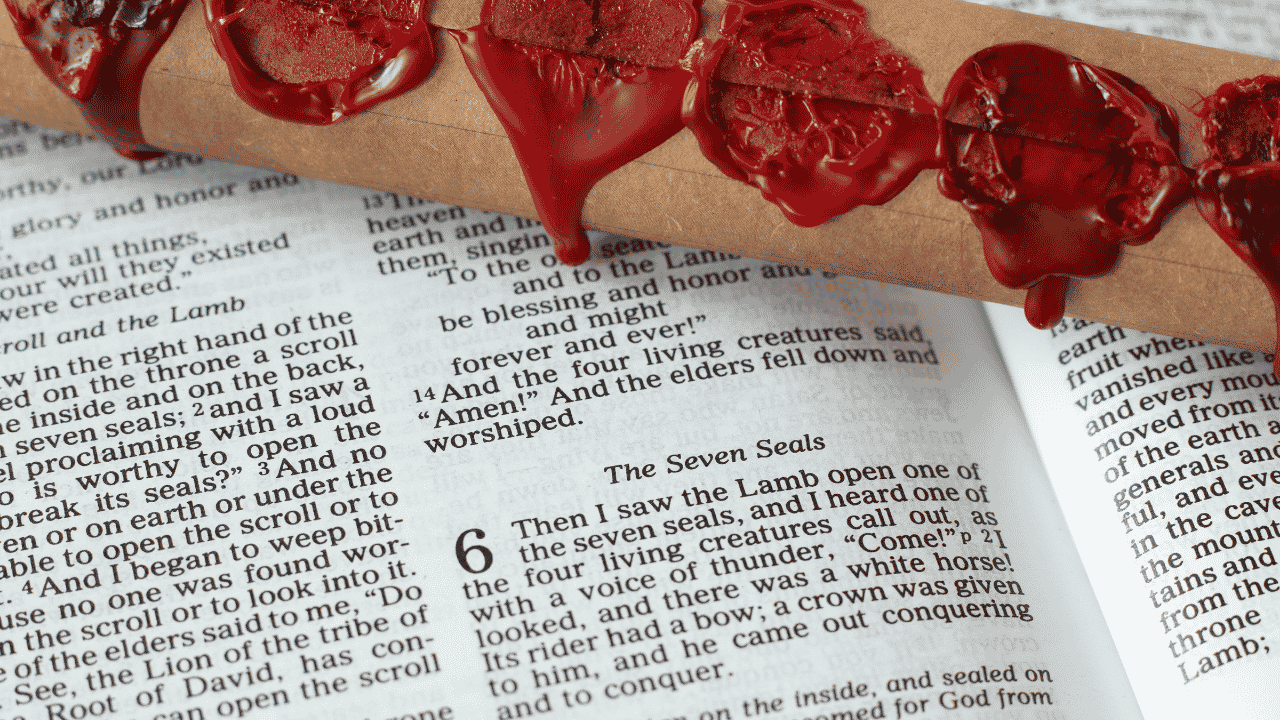
The Preachers of the Gospel of the Kingdom (Rev 6:9-11)
In Revelation 6:9-11, John prophetically sees, at the opening of the fifth seal, under the altar the souls of those who have suffered martyrdom because of the word of God and because of the testimony which they had. They cry out for vengeance and receive the comforting answer that they must wait a little while longer.
The cry for vengeance and retribution shows that these martyrs, who have offered up their lives as a sacrifice, are not standing on the ground of Christianity. This is not the language of a Christian, but of the prophets and psalmists of the Old Testament. How differently did a Stephen in Acts 7:60 and a Paul in 2 Timothy 4:16 speak! Your and our example is the Lord Jesus, who in His greatest sufferings could pray: “Father, forgive them; for they do not know what they are doing” (Luke 23:34). – Here it is evidently a matter of the souls of those who are killed right at the beginning of the time of tribulation because they proclaim the gospel of the coming kingdom of God (cf. Matthew 24:8.9). At the appearing of the Lord with the heavenly armies on the earth, they too will be raised with others to reign with Him (Rev 20:4).
The 144,000 Chosen from Israel (Rev 7:3-8)
In Revelation 7, the course of events is briefly interrupted to introduce two groups of believers who are preserved by God during the time of tribulation. These two groups also do not belong to the Assembly of God. In it, there is no difference between Jews and Gentiles (1 Corinthians 12:13; Ephesians 2:11-17). Here, however, those sealed from Israel are clearly distinguished from the great multitude of the redeemed from the nations.
First, 12,000 chosen ones from each tribe of the people of Israel are sealed. Dan and Ephraim are not mentioned, no doubt because of their idolatry (Judges 18; Hosea 4). In their place appear Joseph and Levi. Through the sealing, the believers from Israel are preserved during all tribulation and distress on the earth for the Millennial Kingdom (see Rev 9:4).
The Great Multitude (Rev 7:9-17)
Of this group of believers, who come from all nations, it is expressly said that it comes out of the great tribulation. Many think they can see in this a picture of all the redeemed. But as already mentioned, the fact that those sealed from the people of Israel are distinguished from this multitude argues against it. In the assembly of God, all national and other earthly distinctions are abolished, but here they are not. The fact that one of the twenty-four elders explains to John who these people are additionally underscores that these are believers who differ from the elders and are not yet in heaven. They stand before the throne of God, but not, like the twenty-four elders and the angels, around the throne. What is said from verse 15 onward also shows that they will be on the earth during the Millennial Kingdom and therefore cannot belong to the glorified believers reigning with Christ.
The Rest of the Offspring of the Woman (Rev 12:17)
The woman in Revelation 12, who gives birth to the male child, is a picture of the people of Israel, from whom the Messiah came. Satan, the dragon, will pursue her and “make war with the rest of her children, who keep the commandments of God and hold to the testimony of Jesus.” These people, then, are individual believing Jews who do not belong to the part of the people specially preserved by God, but are persecuted by Satan because of their holding fast to the word of God, and yet are saved (cf. Matthew 24:16; Zephaniah 3:12).
The 144,000 with the Lamb (Rev 14:1-5)
Revelation 14 is again a parenthetical section that describes various scenes from the end time. In the first five verses, we see the Lord Jesus as the Lamb standing on Mount Zion, and with Him, 144,000 believers. Here, it is not added, as in chapter 7:3-8, that they are from the twelve tribes of Israel. But the number 144,000 points to God’s earthly people, so that here, in contrast to chapter 7, we may see the remnant from the Jews.
This thought is reinforced by the mention of Mount Zion (Jerusalem). Zion is the center of government and grace in the Millennial Kingdom. This believing remnant also is before the throne of God, but on the earth (cf. ch. 7:9). It is also distinguished from the twenty-four elders in heaven, and is therefore not identical with them. These 144,000 redeemed also sing a new song, but one that no one else can sing except they alone.
The Overcomers of the Beast (Rev 15:2)
The believers presented here stand on a sea of glass, which we already find mentioned in chapter 4:6. At the tabernacle and at the temple, there was a bronze basin, called the sea, which was filled with water and served for the cleansing of the priests. This sea of glass, however, is not a picture of cleansing, but of completed purity, since it consists of a solid mass. However, it is mixed with fire—an indication of the terrible persecution at the hands of the ruler of the Roman Empire, the first beast of Revelation 13, which these martyrs had to endure. As overcomers, however, they remained faithful unto death and now sing the song of Moses and the song of the Lamb. The song of Moses in Exodus 15 was the first song of faith in God’s word; here we now find the last. These believers also are not in the same position as the twenty-four elders, who sing a new song in which priesthood and kingship are spoken of. The martyrs mentioned here from the period of the re-emerging Roman Empire are listed in Revelation 20:4 as the third group of the saints raised and reigning with Christ in the Millennial Kingdom.
My People (Rev 18:4)
Revelation 17 and 18 contain the description of the great prostitute Babylon, first as a woman in connection with the Roman Empire (ch. 17) and then as a city (ch. 18). What a grotesque caricature of the bride of Christ, the true church, which is called the wife of the Lamb and the city of God (Rev 21)! Babylon is the final stage of the world church without Christ on earth, characterized by idolatry and the exercise of worldly power. Before the Lord appears on the earth again with His true bride, who was caught up to Him before the judgments of the end times, the false bride, Babylon, must be judged. Before this judgment on Babylon, believers are now called: “Come out of her, my people, so that you will not participate in her sins and receive any of her plagues.” So even in this devilish, religious organization of Babylon, there will still be people who have been converted through the preaching of the gospel of the kingdom (Matt 24:14) and who are awaiting the appearing of the Lord Jesus as King. As ignorant, sincere souls, they have joined this false church. This last appeal to separation is addressed to them, before Babylon receives its judgment.
Summary
We have now seen from various passages of the New Testament that believers in the present age of grace do not expect the great tribulation, but the soon coming of the Lord Jesus for the rapture before the tribulation. After the rapture of the assembly, the time of the final judgments and of tribulation for the Jews will begin in this world. But even in this time, God will have good news proclaimed: the gospel of the kingdom, which points to the near appearing of Christ to establish the kingdom of peace. Many Jews and Gentiles will accept it. Some will have to pay for it as martyrs with their lives. These will be raised before the thousand-year kingdom and will reign together with Christ and the believers who were previously caught up. Others will be preserved through this time of judgments and will enter the kingdom of peace alive on the earth. When God’s Word speaks of such believers who live in the difficult time before the public appearing of Christ, it does not mean the assembly of God, which is then already united with its Head in heaven, but believers who will come to faith after the rapture through the gospel of the kingdom and who will testify and suffer for the Lord in this time of the great tribulation. But then the sufferings of believers living today will already be ended forever. They will then be with their Lord.
Suffering for Christ’s sake
If, then, as we have seen, the assembly is not waiting for the great tribulation, but for the coming of the Lord before the tribulation, this does not mean, however, that believers of the present time will be spared all suffering. The Lord Jesus Himself announced persecutions to His own (John 15:20). Paul told the believers in Asia Minor that we must enter the kingdom of God through many tribulations (or afflictions) (Acts 14:22); and to his coworker Timothy he wrote: “Indeed, all who want to live in a godly way in Christ Jesus will be persecuted” (2 Timothy 3:12). What sufferings the persecutions of Christians in the first centuries also brought upon the children of God! How many believers still have to suffer today in some countries! Even if we enjoy religious freedom in democratically governed countries, we will still, more or less, feel the hostility and hatred of our fellow human beings if we wish to follow the Lord faithfully. “A slave is not greater than his master; if they persecuted Me, they will persecute you as well.”
The fact that the assembly is preserved from the hour of testing does not mean, then, that there will be no suffering for it, no tribulation from the side of people. In that respect, the argument of “fear of suffering” cited at the beginning is not valid. But we must not equate these predicted tribulations with the great tribulation, from which we are preserved when the Lord Jesus comes to take us home to the Father’s house.







Comments (0)
No comments yet.