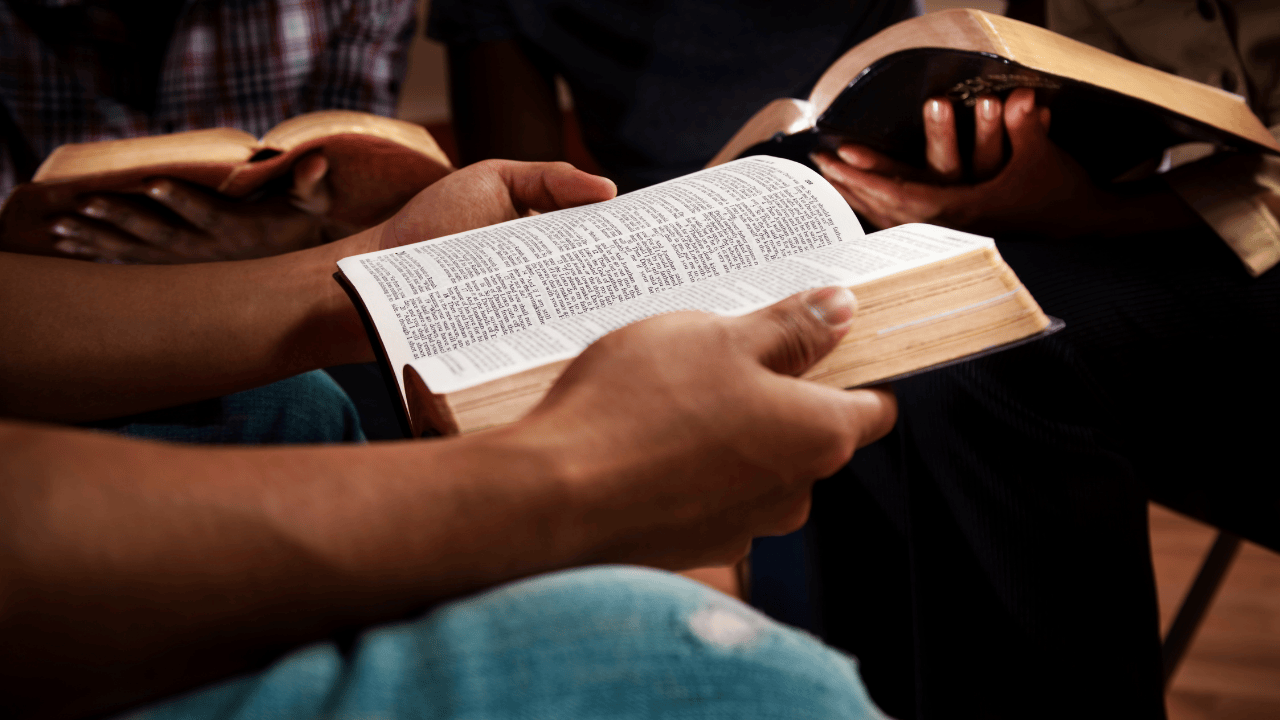

Is this or that Allowed for Christians?

Descipleship

10as you try to learn what is pleasing to the Lord.

– Ephesians 5:10

17Therefore do not be foolish, but understand what the will of the Lord is.

– Ephesians 5:17

10so that you may discover the things that are excellent, that you may be sincere and blameless for the day of Christ;

– Philippians 1:10

9For this reason we also, since the day we heard about it, have not ceased praying for you and asking that you may be filled with the knowledge of His will in all spiritual wisdom and understanding, 10so that you will walk in a manner worthy of the Lord, to please Him in all respects, bearing fruit in every good work and increasing in the knowledge of God;

– Colossians 1:9-10

2And do not be conformed to this world, but be transformed by the renewing of your mind, so that you may prove what the will of God is, that which is good and acceptable and perfect.

– Romans 12:2

A wealthy landowner had to hire a new coachman. On the day the decision about the new coachman was to be made, several coachmen gathered at the estate. Each coachman was asked the same question: “How safely can you drive me on a narrow mountain path?” The first coachman could drive safely within one meter of the ravine’s edge. The second coachman managed half a meter, so it continued. Each of the following coachmen could drive even closer to the edge. Finally, the last coachman arrived and was asked the same question. He replied: “I always drive as far away from the edge as possible!” He got the job.

The Bible tells us the will of God in many ways. This will is clearly recognizable, and we should make every effort to recognize it (Eph. 5:17). The apostle Paul prayed for the Colossians so that they might be “filled with the knowledge of His will” (Col. 1:9). The Greek word used here for “to be filled” (pleroo) means to be filled entirely, like a cup that is filled to the brim. Anyone who is “filled” in this way can walk worthy of the Lord unto all pleasing (Col. 1:10). Incidentally, this knowledge does not “come to us.” If we want to gain it, it is necessary to read the Bible prayerfully and with open eyes.

The law regulated the life of an Israelite down to the smallest detail. He could know quite precisely what he was allowed to do and what not. It is different for us, who live under grace and not under law. We have “freedom,” and in many questions the Bible does not tell us what to do. It doesn’t tell us which car or which clothes we can buy. Nor does it tell us where we should spend our vacation. And yet, we can behave correctly in everyday life, according to God’s will.

We can learn from Romans 12:2 that we should examine “what is the good and acceptable and perfect will of God“; Ephesians 5:10 also calls on us to examine “what is pleasing to the Lord” or “what is more excellent” (Phil. 1:10). Such a serious examination will answer many a may-I-do-this-or-that-or-can-I-go-there-or-there question. It will prevent us from staying in gray areas or even danger zones. Let us not, like most of the coachmen, try out what is still possible, but, like the last coachman, stay away from all kinds of evil as far as possible and always ask: “What do you want me to do, Lord?”




Comments (0)

No comments yet.

Share this article:

You want to contact us? Ask a question or let us know what you think! 

Write a message here!

Leave a Comment

Abiding in Christ

This article is about abiding in Christ as both privilege and responsibility: only by living in dependence on His presence can believers bear “fruit” that reflects His character. It stresses that fruit isn’t produced by striving for it, but by focusing on Christ—“without Me you can do nothing.”
John 15:4–5

The Favor of the World

This article is about how the world’s praise can be shallow and fleeting. Using Nebuchadnezzar’s reaction to Daniel and the crowd’s reversal toward Paul, it warns that exaggerated favor can quickly turn into hostility without true inner change.
 Daniel 2,46

Which Believers Go Through the Great Tribulation?

This article is about whether today’s Christians will face the Great Tribulation. It argues the church will be raptured before end-time wrath, explains the rapture vs. Christ’s public appearing, and identifies the believers in Revelation’s tribulation as those who come to faith after the rapture.
Marriage & Family

Situationship

This article is about “situationships”: undefined, commitment-free relationships that blur friendship and romance. Using Leon and Emma as an example, it warns they create imbalance and hurt, and argues from a biblical view for clarity, responsibility, protection, purity, and commitment toward marriage.
Amos 3:3

The Hummingbird – a Masterpiece of God’s Creation

This article is about the hummingbird as a marvel of nature—exploring its unique hovering flight, specialized wing and muscle structure, extreme metabolism, nectar-feeding tongue design, and cooling methods, framed as evidence of divine creative power.
Romans 1:20

Scripture Alone?!

This article is about whether 2 Timothy 3:16–17 undermines “Scripture alone.” It argues the passage supports Scripture’s sufficiency, distinguishes apostolic teaching from later tradition, affirms NT authority, and says the church recognized—not created—the canon.
2 Timothy 3:16.17

Revelation—Not a Book with Seven Seals!

This article is about why the Bible’s book of Revelation isn’t a sealed mystery but an “unveiling” of future events centered on Jesus Christ. It explains key opening verses, symbolic language, the chain of revelation, and the blessing for reading, hearing, and keeping its message.
Revelation 1:1-3
Gospel

My Sin is Great

This article is about sincere confession: admitting our sin is great and seeking forgiveness for God’s name’s sake. It explains that faith trusts God’s mercy shown in Christ’s cross, producing honesty that doesn’t downplay guilt, and notes the Psalms’ purposeful order.
Psalm 25:11
Church/Assembly

All Present Before God

This article is about Acts 10:33 and Cornelius’s gathering as a model for Christian meetings: obedience to God’s leading, awareness of God’s presence, listening to the whole message without picking parts, and speaking only what God commands—nothing added or omitted.
Acts 10:33

Q&A What does it mean, that God has given us “of His Spirit”

This article is about the meaning of “from His Spirit” in 1 John 4:13, explaining it doesn’t mean believers receive only part of the Spirit. Instead, it highlights what proceeds from God’s Spirit—love, truth, holiness—becoming visible evidence that God abides in us.
1 John 3:24; 4:13

Our Great High Priest

This article is about Jesus as the superior High Priest in Hebrews: His once-for-all sacrifice for sin, His ongoing heavenly service with compassion and help for believers, and His continual intercession before God that brings grace, mercy, and confidence to draw near.
Hebrews 2:17–18; Hebrews 7:25; Hebrews 9:24
Bible Study

The Old Man and The New Man

This article is about the New Testament concepts of the “old self” and “new self”: the old self judged and crucified with Christ, the new self created in His resurrection, and how believers should live out their new identity by putting off old traits and displaying Christlike ones.
Romans 6:6; Ephesians 2:15; 4:22.24; Colossians 3:9.10