Home » Jesus Christ » Page 3
Jesus Christ
After the flood, humanity again chose pride and control at Babel. The same struggle lives in us today. Jesus modeled humble surrender—serving others and trusting the Father’s authority. Where do you need to let go and let God lead?
Numbers 11:23
The text explains what it means to be transformed through renewing the mind (Romans 12:2), warning that media and online content can shape thinking. It encourages daily spiritual “food” by focusing on Jesus in the Gospels and epistles to grow in likeness to Him.
2 Corinthians 3:18
The text discusses 1 Corinthians 15:20, countering claims in Corinth that there is no bodily resurrection. It outlines seven witnesses to Jesus’ resurrection and seven implications for faith if He had not risen, affirming He truly rose.
1 Corinthians 15:20
The text reflects on how worldly influences and reliance on money can undermine believers’ trust in God, using Abraham’s flight to Egypt as an example. It contrasts this with Jesus’ resistance to temptation and urges steadfastness in trials.
John 16:33
As Jesus is led to Golgotha, mourners follow—yet He warns them to weep for themselves and their children, urging repentance before God’s coming judgment. He contrasts Himself as the “green tree” with spiritually “dry” Israel, and fulfills prophecy as He is taken to die alongside two criminals.
Luke 23:27,31
After Pilate’s sentence, Jesus is handed over to a full Roman cohort and turned into a cruel spectacle. The soldiers mock Him as “King of the Jews,” stripping Him, dressing Him in a scarlet robe, crowning Him with thorns, and giving Him a reed as a scepter—then kneel in false homage, spit on Him, and beat His thorn-crowned head.
Matthew 27:28-30
During Passover, Pilate offers the crowd a choice between Jesus and Barabbas, a notorious robber and murderer. Urged on by the religious leaders, the people demand Barabbas’ release and Jesus’ crucifixion. The passage contrasts their characters and ends with a note of hope: God’s grace later leads many to faith.
Matthew 27:16
After Jesus is condemned by the Sanhedrin, He is taken to Pilate on false charges. Pilate finds no guilt and sends Him to Herod, who seeks a miracle, mocks Him, and sends Him back. Though His innocence is affirmed repeatedly, the leaders whip the crowd into cries of “Crucify,” and the righteous One is unjustly sentenced.
Luke 23:21
On a cold night in the high priest’s courtyard, Peter denies knowing Jesus three times—each denial stronger than the last. The rooster crows, and Jesus turns to look at him. Cut to the heart, Peter weeps bitterly. A sober warning against self-confidence—and a glimpse of Christ’s restoring love.
Matthew 26:70-74
After His arrest, Jesus is interrogated by Jewish leaders in the high priest’s courtyard. Lacking evidence, they seek false witnesses while He remains silent, fulfilling prophecy. When compelled to answer, He affirms His identity as Son of God and Son of Man. The leaders condemn Him, then spit on, mock, and beat Him—yet He endures in humility on the way to the cross.
Ecclesiastes 3:16
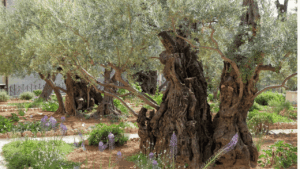
This article is about Jesus in Gethsemane facing betrayal, suffering, God’s judgment, and death—fully aware of what awaited Him. It highlights Judas’s treachery, the fulfillment of Old Testament prophecies, and Jesus’ calm authority, protective love for His disciples, and submission to the Father.
John 18:4
Jesus leads His disciples to Gethsemane, leaving most behind while Peter, James, and John go with Him. There He is overwhelmed with grief and anguish, praying so intensely His sweat is like drops of blood. Three times He asks that the cup pass—yet submits fully: “Not my will, but Yours be done.”
Matthew 26:37-38
This series traces Jesus’ final hours before the cross. Part 1 focuses on the “night He was betrayed”: the Passover meal He eagerly desired, Judas exposed and leaving into the night, and the start of the Lord’s Supper—“Do this in remembrance of Me”—set against the unfolding handovers that led to His suffering.
1 Cor 11:23
A devotional reflection on Jesus’ poverty, tracing His humble birth, lack of home, money and possessions, and dependence on others, and concluding that His lowliness points to spiritual riches gained through His sacrifice, as highlighted in 2 Corinthians 8:9.
2 Corinthians 8:9
Reflecting on Cain’s and Seth’s descendants, the text contrasts prideful self-reliance with prayerful dependence, warning against consumerism and conformity to the world. It points to Jesus’ modest, thankful life as a model for contentment and gratitude.
1 Timothy 6:6
A devotional reflection on Jesus’ 40 days in the wilderness argues that His temptation by Satan showed Satan’s powerlessness and Jesus’ sinlessness, linking this to new birth teaching that what is born of God cannot sin.
Mark 1:13
The text reflects on how modern distractions like technology and smartphones can pull people from eternal priorities, contrasting this with Jesus’ habit of retreating to solitary places for prayer, and urging readers to limit distractions to seek God undisturbed.
1 John 2:17
The text reflects on Jesus being placed at the center at Golgotha between criminals, then appearing among his disciples after the resurrection, remaining present in believers’ gatherings, and ultimately standing at the center of worship in eternity.
John 19:17-18
This article deals with the profound themes of Psalm 88, exploring its connections to Christ’s suffering and the concept of being cursed, while reflecting on the hope and redemption offered through His sacrifice.
Psalm 88:7
A reflection on Adam and Eve’s distrust of God and how human desires take over when God is left out, contrasting this with God’s love shown at Calvary and Jesus’ trust in the Father, ending with questions about daily trust and decision-making.
Psalm 119:68; Genesis 3:1